Projects about the universe, nature & humans · Ages 6–12
Spark their curiosity.
Big questions and open-ended projects for curious children aged 6–12, from planets to ancient writing. On their own or with a friend, children make something real. No worksheets, no ads, no points, no passive screen time.
Or join the first 100 founding families for €9
Your €9 goes towards your first month's subscription when Spark launches. Refundable on request. Spark is not available yet. No subscription starts today.
Reserve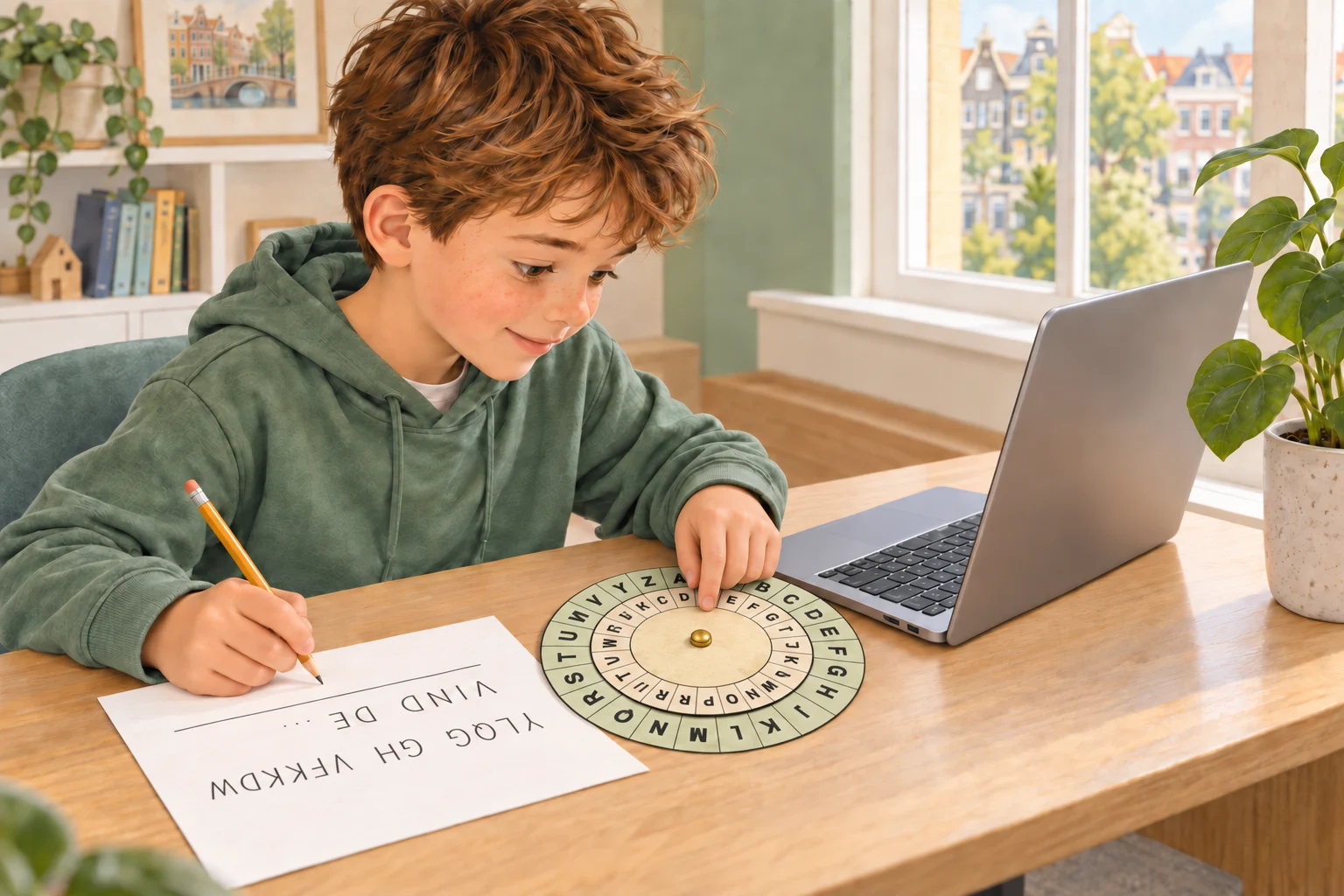
Let them work it out.
What makes a secret code hard to crack? Children spot patterns, test possible meanings and change their rules when a code is too easy to solve. Each attempt gives them something to think through.
Guidance offers questions and hints rather than ready-made answers. Children can see what works, make changes and find satisfaction in something they have figured out themselves.
An hour to go deeper.
Designed around a focused 60-minute session, with time to choose a project, get absorbed in the work and reflect on what happened. No points or streaks pulling children towards the next activity.

How can a cloud become a star?
One example of the big questions that could start an exploration.
Start with a big question
A short story opens a question about the universe, nature or human history. Children imagine possibilities, ask why and connect what they already know to something new.
Choose a project. Make it their own.
A few carefully chosen projects offer a clear starting point. Children choose their approach within simple ground rules, including respecting other people's work and handling materials safely. Guidance helps them think without taking over.
Think and make together
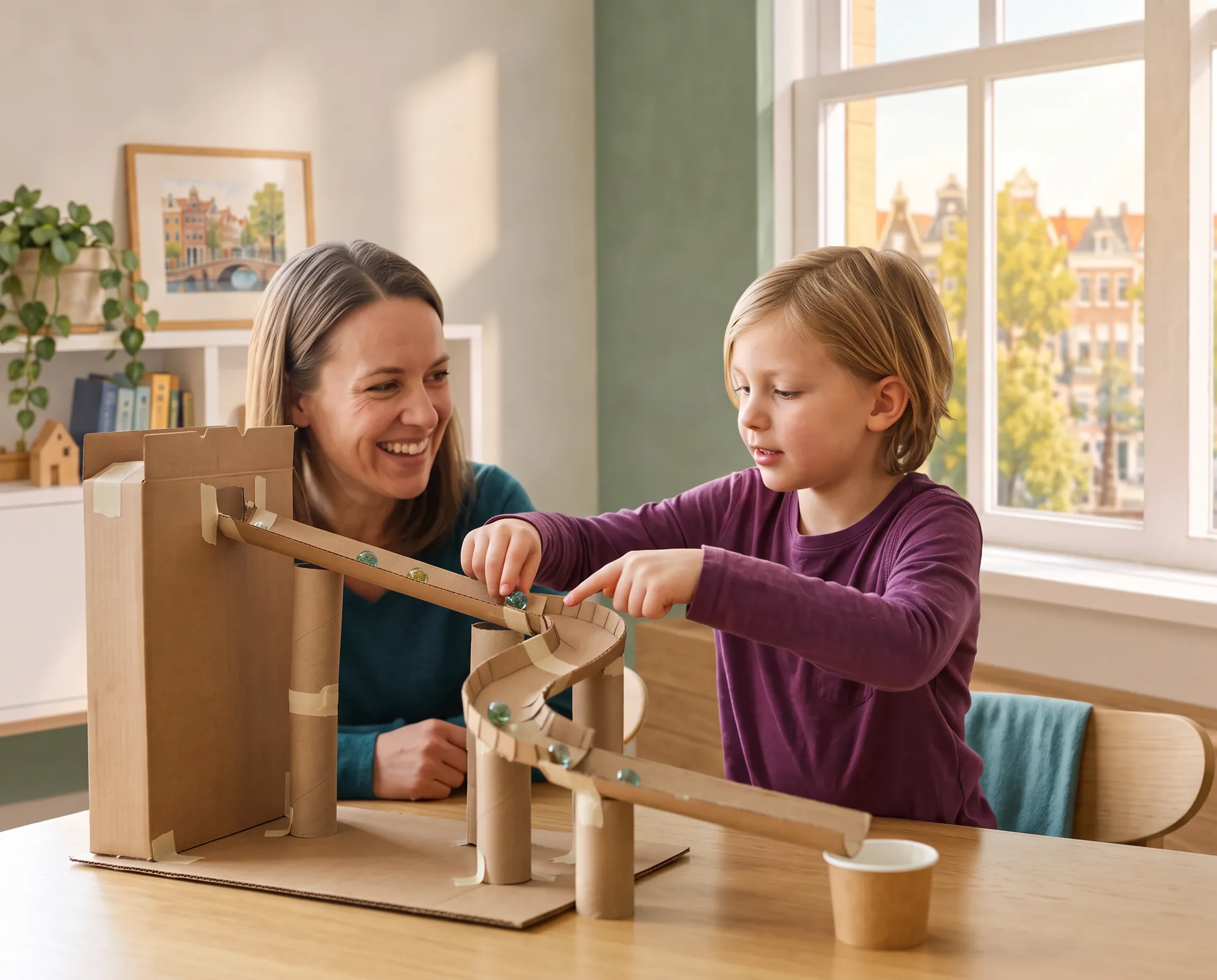
Children can do the projects on their own or with a friend. Children compare ideas, explain their choices and use what happens in the project to check their thinking. Digital, hands-on or a mix of both.

Sample projects we would make
Four ideas about the universe, life, humans, and writing and numbers. These projects are not built yet. Each would begin with a 60-minute session that ends with something your child has made. They could stop there or explore further on another day, on their own or with a friend.
Use a lamp and a moving marble to explore how a planet dims its star. Then investigate telescope data and make a case for whether a star has a planet.
What they would makeA hand-drawn light curve and a case file for one star, with a verdict and reasons.
If they want to go furtherOn another day, investigate an impostor signal or design a mystery star system for someone else to solve.
Observe a magnified drop of water, notice how tiny creatures move and sketch what you find. Begin a field guide to a habitat you discovered yourself.
What they would makeA first field-guide page with sketches, sizes and observations of movement.
If they want to go furtherOn another day, build a fuller field guide or map who eats whom and test a prediction.
Press marks into clay to record a village trade so someone else can understand it. Then investigate an ancient tablet and work out what its marks might mean.
What they would makeA clay receipt and a proposed translation of a tablet, showing which guesses you are confident about.
If they want to go furtherOn another day, invent a sign system for your household or make a time capsule for a future archaeologist.
Use dots, taps and sounds to teach an imagined alien to count. Then build a first pixel picture on paper, without assuming the reader understands our words or symbols.
What they would makeA number lesson for the alien reader and a first pixel picture.
If they want to go furtherOn another day, repair your message after a decoding test or try it on a friend or family member who has not seen the key.
Room to think for themselves.
For children who want to know why, imagine what could be different and care about what is fair. The experience is being designed to give their ideas a purpose, with enough structure to begin and enough freedom to find their own way.
Real choice, with a clear starting point
A few thoughtful projects give children something to choose between. Clear guidance and shared ground rules provide structure; children decide how to approach the work.
Discover what works for themselves
A bridge carries the weight or it does not. A partner can decipher the code or cannot. Projects give children ways to check their ideas, notice mistakes and try a different approach.
The satisfaction is in the work
No grades, points or streaks. A stronger bridge, an explanation that makes sense or a creation they are proud of gives children a reason to keep going.
Time to get absorbed
Set aside a calm 60-minute block for the project. The aim is sustained work at the child's pace, without notifications, reward prompts or a feed competing for their attention.
A few practical questions.
The proposed experience, practical questions and how reservations and the free waitlist work.
Give their questions room to grow.
Time to think deeply, other children to build with and something to be proud of. Join the free waitlist to hear when Spark is ready. You can also reserve a place as a founding family.
Or join the first 100 founding families for €9
Your €9 goes towards your first month's subscription when Spark launches. Refundable on request. Spark is not available yet. No subscription starts today.
ReserveImages illustrate the proposed experience, not an existing product.